Clear, useful guides
Mexc exchange is a high-listing crypto venue for spot markets and MX token fee perks
Centralized crypto trading platform for spot markets, futures, and token listings, with MX token fee discounts for active users.
Mexc exchange is a centralized cryptocurrency trading venue known for a wide selection of listed tokens, active spot markets, USDT-margined futures, and fee benefits tied to the MX token. Users deposit crypto or buy selected assets through supported payment rails, trade through an order book, and manage balances inside a custodial account. Its appeal is direct: access to many trading pairs, frequent new listings, and exchange-native tools for active market participants.
Broad token access drives the core appeal
The platform's strongest identity is listing breadth. It covers major assets such as Bitcoin, Ethereum, Solana, XRP, Dogecoin, and stablecoins, while also carrying newer or smaller tokens that appear after community demand, launch events, or market growth. That makes it attractive to traders who want early access to assets before they reach more conservative venues.
That breadth changes how people use it. A long-term Bitcoin buyer might care mostly about liquidity and withdrawal reliability, while an active altcoin trader studies order-book depth, spread, listing notices, and available networks before entering a position. Mexc exchange fits the second behavior especially well because discovery, trading, and portfolio movement all happen in the same account interface.
Spot markets, futures, and the MX token work together
Spot trading is the base layer. A user holds one asset and exchanges it for another at the current market price or through a limit order. Common pairs use USDT as the quote currency, which keeps pricing familiar across assets. The order book shows bids, asks, recent trades, and the spread between buyers and sellers.
Futures add a separate derivatives venue where traders post margin and take long or short exposure without owning the underlying coin in the same way as spot. Leverage magnifies gains and losses, so liquidation price, funding payments, and margin mode matter before order size. MX, the platform token, connects to the broader account experience through trading-fee deductions, event participation, and exchange ecosystem incentives when those programs are active.
How a basic trade moves from deposit to order book
A typical workflow starts with account setup, security settings, and a deposit address for the asset and network the user intends to send. Network choice matters: USDT on Tron, Ethereum, Solana, BNB Smart Chain, or another supported chain uses different addresses, fees , and confirmation behavior. Sending a token to the wrong network creates a recovery problem rather than a trading delay.
Once funds arrive, the user chooses a market pair, reviews depth, and places a market or limit order. Market orders fill quickly against available liquidity, while limit orders wait at a chosen price. On Mexc exchange, the same account area also separates spot balances from futures balances, so moving funds between wallets inside the platform is part of the trading flow before opening a leveraged position.
Fee perks center on MX and trading tier details
Trading costs come from maker fees, taker fees, futures fees, spreads, funding rates, and withdrawal charges. Maker orders add liquidity by resting on the book; taker orders remove liquidity by filling immediately. The posted fee schedule changes by market type, account tier, promotional period, and whether MX fee deduction is enabled.
MX token benefits matter most for users who trade repeatedly. Holding or using MX for fee deductions lowers friction across frequent orders, especially where small percentage differences add up over many entries and exits. The important calculation is total execution cost: quoted fee, bid-ask spread, slippage on thinner pairs, and the withdrawal fee for moving assets out after trading.
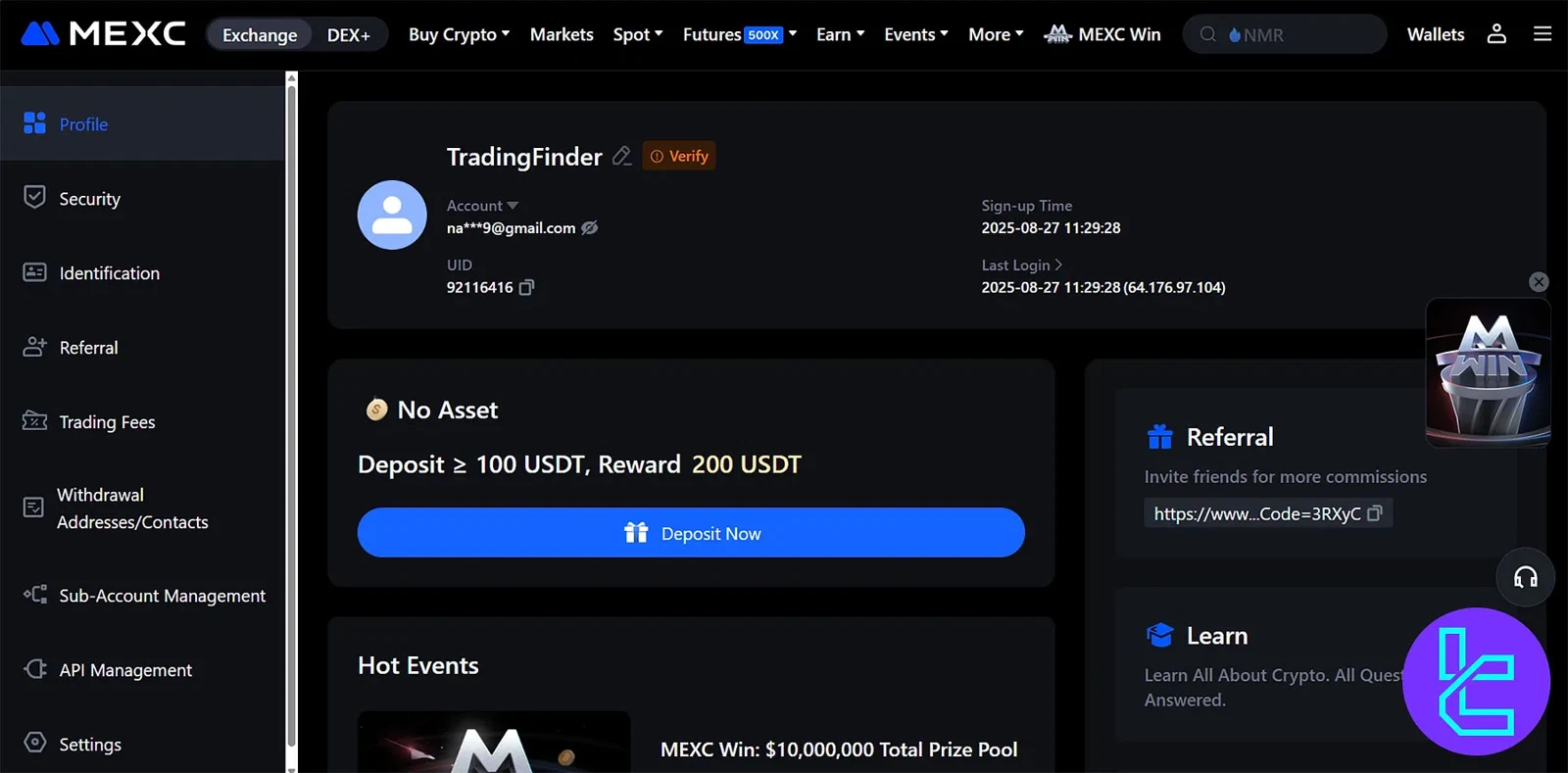
New listings, Kickstarter events, and market discovery
Listing activity is part of the brand. Traders watch announcements for new spot pairs, futures contracts, assessment-zone labels, and exchange events connected to project launches. These pages create visibility for tokens that still have uneven liquidity across the wider market.
That discovery value has a tradeoff. Fresh listings draw volatility, fast price gaps, and aggressive order flow. A token with visible volume still needs a check of order-book depth and withdrawal status before a large trade. Mexc exchange gives access to many markets, but access alone does not make every pair deep, stable, or suitable for a large position.
Account controls that matter before funding
Security starts before the first deposit. Users should enable two-factor authentication, set an anti-phishing code where available, review withdrawal whitelist settings, and understand identity verification requirements for their region and activity level. These controls reduce avoidable account risk and create a cleaner path if support review is needed later.
There are several settings worth reviewing early:
- Login protection, including authenticator-app verification.
- Withdrawal address management for frequently used wallets.
- Spot and futures wallet balances before transferring funds internally.
- Order confirmation settings for market and leveraged orders.
- API key permissions if using bots, tax tools, or portfolio trackers.
The strongest setup keeps trading permissions separate from withdrawal permissions, especially for API keys. If a key feeds data to a third-party tool, it does not need withdrawal access.
Where the platform fits beside larger exchanges
Binance remains the broad global benchmark for liquidity and product range, Coinbase emphasizes a regulated fiat on-ramp in the United States, and Kraken is known for conservative asset support and strong fiat rails in several markets. Against that group, Mexc exchange stands out for faster access to a wider set of altcoins and a trading interface built for users who move among spot, futures, and launch-related markets.
This positioning suits traders who already understand wallets, stablecoins, network fees, and order types. A beginner seeking only recurring Bitcoin purchases with bank transfers might prefer a simpler regulated on-ramp first. An altcoin-focused trader who wants USDT pairs, early listings, futures exposure, and MX-based account benefits will find a more direct match here.
Liquidity, withdrawals, and regional availability deserve attention
Liquidity differs by pair. BTC/USDT and ETH/USDT behave differently from a newly listed micro-cap token, even on the same exchange. Thin books widen spreads and move more sharply when a user sends a large market order. Limit orders, smaller order slices, and checking recent volume help reduce poor fills.
Regional access also matters. Centralized exchanges apply restrictions based on country, identity checks, sanctions rules, product permissions, and internal risk controls. Some products, especially derivatives, are unavailable in certain jurisdictions. Before relying on Mexc exchange as a main trading venue, a user should confirm account access, withdrawal routes, and supported networks from inside the account experience itself.

A clear fit for active crypto users
The platform is best understood as an active trading venue rather than a passive storage destination. Its strongest value comes from listed-market variety, familiar USDT order books, futures tools, MX token fee mechanics, and fast access to emerging assets. Those strengths reward users who compare spreads, understand network transfers, and keep custody decisions separate from trading convenience.
Viewed clearly, Mexc exchange serves traders who want range and speed. It provides a large menu of crypto markets in one custodial account, while the user still carries responsibility for order type, leverage, network selection, and withdrawal planning. That combination makes it useful, but it also makes preparation part of the product experience.
Mexc exchange FAQ
Does MEXC require identity verification before trading?
MEXC uses account verification rules that vary by region, product, payment method, and withdrawal needs. Basic account access and crypto deposits are separate from higher-limit activity, fiat purchases, and derivatives availability. Users planning to trade size or use futures should complete the required checks before transferring meaningful funds, because verification review during an active market move creates unnecessary friction.
What fees should I check before using MX token discounts?
Check the spot maker fee, spot taker fee, futures maker fee, futures taker fee, funding rate, withdrawal fee, and the spread on the exact pair you plan to trade. MX token discounts reduce part of the trading-fee burden when enabled, but they do not erase slippage, blockchain network costs, or funding payments on leveraged positions.
Can I withdraw small-cap tokens from MEXC to my own wallet?
Withdrawal support depends on the token and the networks enabled for that asset. Some newly listed or smaller tokens trade before every network route is convenient, and maintenance windows temporarily pause deposits or withdrawals. Before buying a token for self-custody, open its deposit and withdrawal panel and confirm the chain, address format, minimum withdrawal, and fee.
Which order type is better for a first spot trade?
A limit order gives more control because it sets the highest price you will pay or the lowest price you will accept. A market order prioritizes speed and fills against the available order book immediately. On liquid pairs the difference is small; on newer altcoins a market order can move through several price levels and produce a worse fill.
How long do crypto deposits take on MEXC?
Deposit time depends on the blockchain network, the required confirmation count, and whether the exchange wallet is processing normally. Solana and Tron transfers often settle faster than Bitcoin or Ethereum during congested periods, but the account balance updates only after the platform credits the transaction. The transaction hash is the best way to track progress before the balance appears.
Is MEXC suitable for automated trading bots?
MEXC offers API access for users who connect bots, market data tools, tax software, or portfolio dashboards. API keys should be scoped tightly: read-only for analytics, trading permission only when needed, and no withdrawal permission for a bot that simply places orders. Rate limits, symbol formatting, and futures endpoints need testing with small balances first.
What happens if I send USDT on the wrong network?
A wrong-network deposit creates a recovery issue because the address, chain, and token contract must all match what the exchange supports. Some mistakes are recoverable after manual review and a fee; others are not practical to recover. The safest process is to copy the deposit address from the selected network and send a small test transfer before moving the full amount.