Clear, useful guides
Mexc exchange is built around fast listings, Launchpad access, and MX token fee savings
Centralized cryptocurrency exchange for spot and futures markets, with Launchpad listings and MX token fee discounts for active traders.
Mexc exchange is a centralized crypto trading venue known for broad spot markets, perpetual futures, frequent new token listings, Launchpad campaigns, and exchange-token discounts through MX. It gives active traders one account for buying listed crypto assets, placing limit or market orders, using USDT-margined contracts, joining token sale events, and reducing certain trading costs when MX fee settings or platform promotions apply.
Launchpad listings make early token access the defining angle
The exchange attracts attention because it lists a wide range of emerging assets and gives registered users structured ways to follow new launches. A token that appears through Launchpad or a related listing campaign gets a dedicated event page, subscription window, eligibility rules, and distribution schedule. That flow matters because early exchange listings concentrate liquidity, price discovery, and community attention in one place.
Mexc exchange is especially relevant to traders who track altcoins before they reach the largest global venues. The platform's launch programs turn a listing into a workflow: review the event terms, check whether MX holdings or account activity matter, subscribe during the stated period, and watch the token move into spot trading after allocation. The process is centralized and account-based, so balances, subscriptions, and settlement all happen inside the exchange interface.
How MX token discounts fit into trading costs
MX is the exchange token tied to several platform utilities, including fee-related benefits, event eligibility, and participation in promotional programs. When a user enables fee deduction or qualifies under current exchange rules, MX reduces selected trading costs by applying a platform-token discount instead of charging the full standard amount in the traded asset or quote currency.
The important distinction is between advertised fee tiers and the effective cost of a trade. Spot orders have maker and taker treatment, futures contracts have their own schedule, and promotions change the bill for particular pairs or user levels. Mexc exchange users who trade frequently care about this because a small percentage difference compounds across many entries, exits, and rebalances. MX also links cost savings to platform participation, so holding it is both a utility choice and a market exposure.
Spot markets for Bitcoin, stablecoins, and newer altcoins
Spot trading is the clearest starting point. A user deposits crypto or buys through an available payment route, chooses a pair such as BTC/USDT or an altcoin against USDT, and places a market or limit order. The exchange records the filled amount in the user's account balance, and the asset becomes available for further trading, transfer, or withdrawal if the network is supported.
Stablecoin pairs dominate many order books because USDT gives traders a common quote asset across Bitcoin, Ethereum, Layer 1 tokens, DeFi assets, meme coins, and newly listed projects. Mexc exchange builds much of its discovery appeal around that breadth. The same interface also includes order history, open orders, depth charts, and candlesticks, which lets a trader compare liquidity before entering a smaller market.
Perpetual futures add leverage, funding, and liquidation mechanics
Futures trading on the venue centers on perpetual contracts, especially USDT-margined pairs. These instruments track the price of an underlying crypto asset without requiring the trader to hold that asset directly. A long position profits when the contract price rises; a short position profits when it falls. Margin, leverage, funding rates, and mark prices decide how the position behaves after entry.
In most cases, Mexc exchange futures are built for active traders who already understand collateral and liquidation. Leverage increases position size relative to margin, so a smaller price move changes account equity faster. Funding payments move between long and short sides at scheduled intervals, and the mark price protects the contract from last-trade price spikes. Those details are operational, not decorative; they determine whether a position survives volatility.
Where Launchpad, Kickstarter, and listing votes overlap
Exchange launch activity is not limited to one button. MEXC has used several campaign formats around new assets, including subscription-style launches, community voting, trading competitions, airdrop-style rewards, and Kickstarter-style events. The names and rules change by campaign, but the core pattern stays consistent: the exchange publishes eligibility criteria, users complete the required account or balance actions, and rewards or allocations settle after the event window closes.
For a participant, the strongest habit is reading the event mechanics before committing funds. Some campaigns emphasize MX holdings, some focus on trading volume, and others distribute rewards based on registration or task completion. Mexc exchange turns those events into a calendar for users who follow new sectors such as AI tokens, gaming assets, DePIN networks, Solana ecosystem coins, and Ethereum Layer 2 projects.
Account setup before the first trade
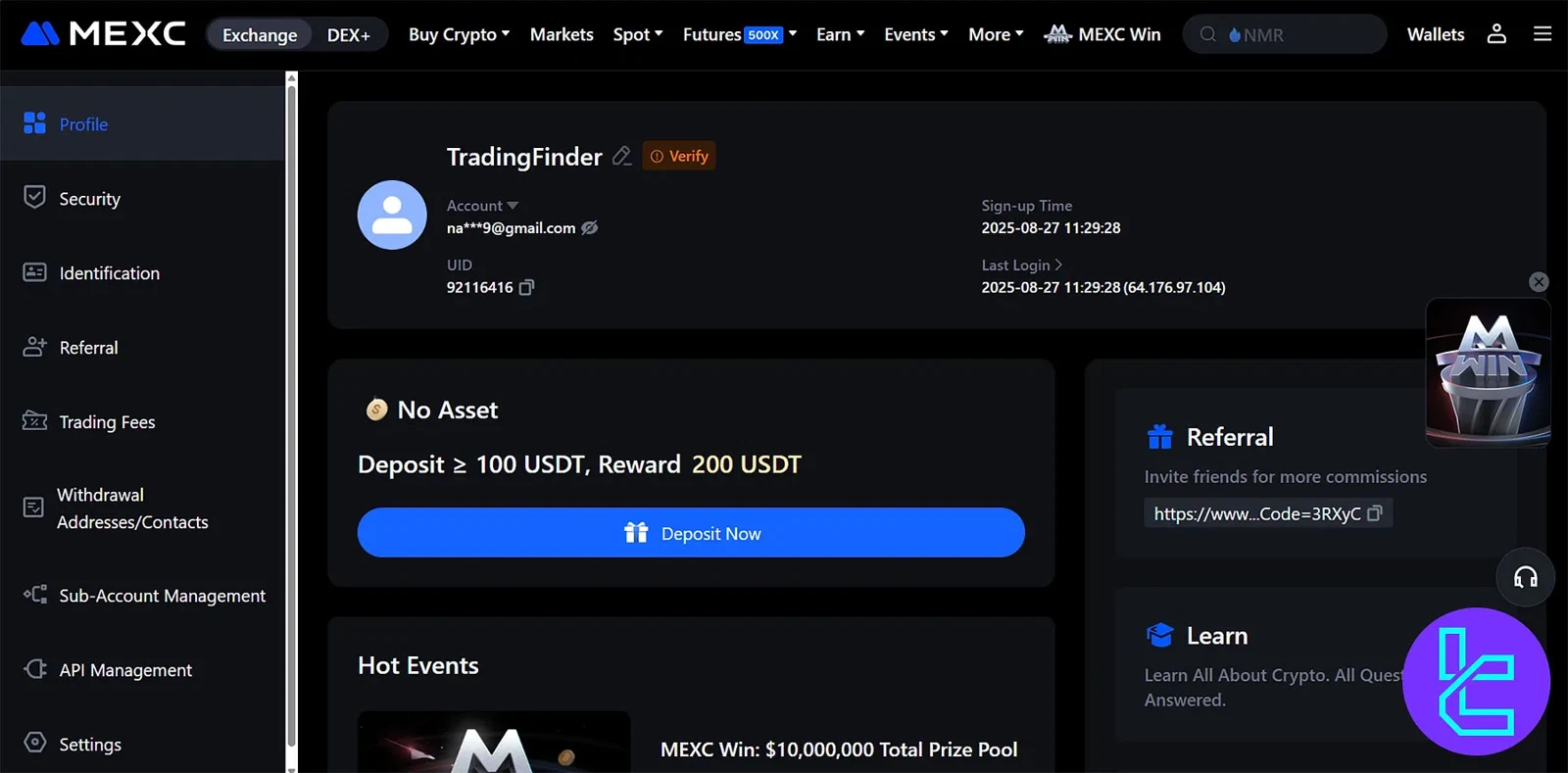
A new user starts with an email or mobile registration, account security settings, and the regional requirements shown inside the platform. Two-factor authentication, withdrawal address controls, and anti-phishing codes reduce the chance of account-level mistakes. Once the account is ready, the user chooses a funding route: crypto deposit, fiat service where available, or transfer from another wallet or exchange.
The first trade should be simple: choose a liquid pair, use a small order, and confirm how balances update after execution. The same account then opens access to spot markets, futures, copy trading features, launch campaigns, and MX-related settings. Before sending a large deposit, match the deposit network exactly to the asset network shown on the exchange deposit screen; a token sent on the wrong chain becomes difficult or impossible to recover.
What active traders actually compare inside the interface
Serious users do more than search for a ticker. They compare liquidity, spreads, depth near the best bid and ask, withdrawal network support, funding rates, and the gap between spot and perpetual prices. A new listing with heavy social attention still needs enough depth for the intended order size. Thin books create slippage, especially when a market order sweeps multiple price levels.
- Spot depth shows whether an entry size fits the order book.
- Maker and taker fees shape the cost of each order style.
- Funding rates affect the ongoing cost of futures exposure.
- Withdrawal networks decide how assets move to self-custody or another venue.
- MX settings determine whether platform-token discounts apply.
For context, Mexc exchange gives traders many of these controls in one dashboard, but the judgment still comes from reading the actual pair page before placing the order.
Benefits for altcoin discovery and portfolio movement
The platform's main strength is market coverage. Traders looking beyond Bitcoin and Ethereum use it to find assets tied to newer narratives, including modular blockchains, restaking, decentralized physical infrastructure, real-world asset tokens, meme sectors, and exchange-launched projects. Fast listing coverage reduces the number of separate venues a trader needs to watch.
Portfolio movement is another practical reason people use the exchange. A user can move from a newly listed token into USDT, rotate into BTC or ETH, enter a futures hedge, or withdraw supported assets through a selected network. Mexc exchange is strongest when those actions happen close together, because the account structure keeps trading balances, launch activity, and fee settings in one environment.

Risks that matter on a listing-focused exchange
New listings bring opportunity and sharp volatility at the same time. Price spreads widen during the first minutes of trading, deposits and withdrawals for a token may open on a separate schedule, and campaign rewards may settle after spot trading begins. Users who treat a listing time as a guaranteed entry point get exposed to slippage, congestion, and fast reversals.
There is also platform risk because centralized exchanges custody user balances while they remain on the venue. Security settings, withdrawal allowlists, and sensible position sizing matter most when an account holds active trading capital. Futures add another layer because liquidation rules act automatically once margin falls below the required threshold.
Binance, Bybit, KuCoin, and Gate.io as nearby alternatives
Traders comparing venues usually put MEXC beside other large centralized exchanges rather than against a wallet swap. Binance has deep global liquidity and a broad product stack where it is available. Bybit is known for derivatives and trading tools. KuCoin and Gate.io also appeal to users who search for wide altcoin coverage and early listings. The right choice comes down to market availability, regional access, pair liquidity, withdrawal support, and the specific campaign a trader wants to join.
| Exchange | Common strength | Best fit |
|---|---|---|
| MEXC | Broad altcoin listings, Launchpad activity, MX utility | Users tracking new tokens and fee discounts |
| Binance | Deep liquidity across major markets | High-volume spot and derivatives traders where supported |
| Bybit | Derivatives interface and trading tools | Futures-focused users |
| KuCoin | Altcoin selection and trading features | Users rotating across smaller listed assets |
On a practical level, Mexc exchange earns its place in that comparison through speed of listing discovery and MX-linked platform features rather than a single isolated product. A trader who values Launchpad events, exchange-token fee savings, and many USDT pairs will find its structure easy to understand after a few spot orders and one careful review of the campaign rules.
Mexc exchange FAQ
Which MEXC markets are most relevant for Launchpad users?
Launchpad users mainly watch spot markets because new allocations move into listed trading pairs after the event rules are completed. USDT pairs are especially important because they concentrate early liquidity and make price discovery easier to follow. Futures markets matter later if the exchange lists a contract for the same asset, but Launchpad participation itself revolves around the event page, eligibility terms, and spot settlement.
Can a United States user trade on Mexc exchange?
Access depends on the platform's current regional restrictions, identity requirements, and product availability for the user's location. A United States user should expect limitations on certain centralized exchange products and should read the account notices shown during registration and login. The relevant answer is determined inside the platform flow because supported jurisdictions, verification rules, and restricted services change over time.
Fees on Mexc exchange: what creates the final cost of a trade?
The final cost comes from several parts: maker or taker treatment, the product type, the user's fee tier, any MX deduction setting, and slippage between the displayed price and the execution price. Futures positions also include funding payments over time. A low headline trading fee matters less when an order enters a thin book and moves through several price levels.
How are MEXC futures different from buying the token on spot?
Spot buying gives the account a balance of the listed token. Perpetual futures create a leveraged contract position that tracks the asset price and uses margin rather than direct token ownership. Futures add funding, mark price, liquidation thresholds, and collateral management. That structure suits directional trading and hedging, while spot is simpler for holding, transferring, or using the asset outside the exchange.